Resources / Caregiver Resources
What Does a Live-In Carer Actually Do All Day?
· Oakcare Team
Many families hesitate to hire because they're not sure what a live-in carer's job actually covers. Here's what the role really looks like, day to day.

A lot of families stall at the same quiet question: what would a live-in carer actually do all day? It's hard to commit to hiring someone when you're not quite sure what the role covers, where it stops, and whether it really fits what your parent needs. The uncertainty itself can be enough to keep you stuck.
So here's a grounded picture of what live-in care usually looks like in practice, and where its edges are.
The daily rhythm of care
Most live-in care is built around the ordinary shape of a day rather than dramatic interventions. Mornings often involve helping your parent wake, wash, dress, and have breakfast, at whatever pace they need. Through the day there's help with meals, medication reminders, mobility and moving safely around the home, and the small, constant business of keeping someone comfortable and safe.
There's also the quieter half of the job that doesn't show up on a task list: company. Someone to talk to, sit with, share a meal with. For many elders, especially those living alone, that steady presence matters as much as any practical task. The loneliness of old age is real, and it isn't fixed by a tidy house.
The hands-on help, when it's needed
Depending on your parent's situation, care can extend to more intimate, physical support: help with bathing and toileting, assistance transferring in and out of bed or a chair, support for someone recovering from a stroke or surgery, or attentive day-to-day care for someone living with dementia. This is the part of the work that asks for skill, patience, and dignity all at once, which is why matching the carer's experience to your parent's actual needs matters so much. These activities of daily living are often the clearest signal of how much support someone genuinely requires.

The household side of the role
Live-in care usually includes the home tasks tied to your parent's wellbeing: preparing their meals, light housekeeping in their living spaces, laundry, and keeping things clean and safe enough to prevent falls and other hazards. The emphasis is on care-related upkeep rather than general domestic service for the whole household, which is a distinction worth being clear about up front so expectations match on both sides.
Where the role has edges
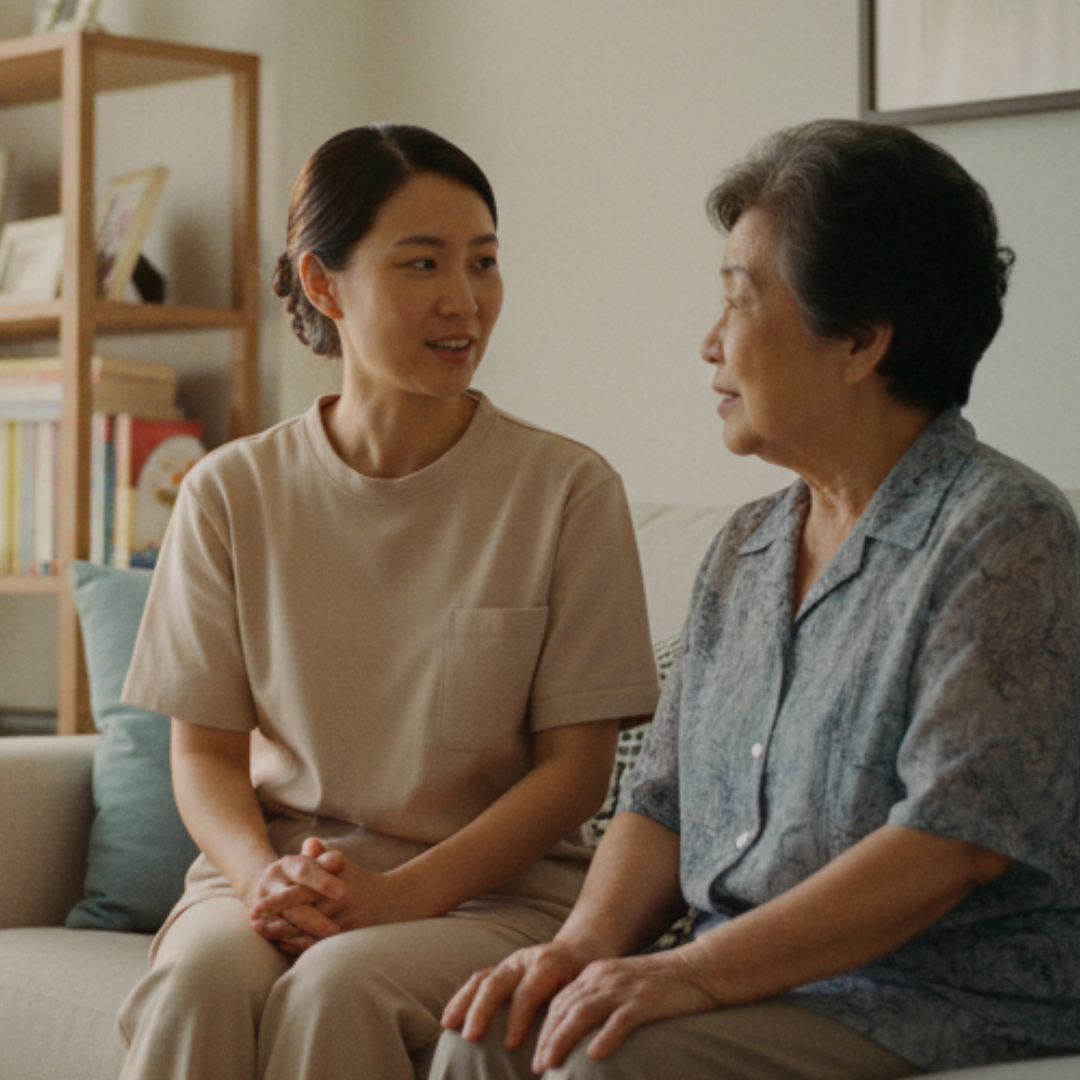
It helps to know what live-in care is not. A carer is not a nurse and shouldn't be expected to perform clinical procedures beyond their training. They are not a round-the-clock machine, they need proper rest and time off, and building that in protects the quality of their care rather than detracting from it. And they are not a replacement for your involvement. The best arrangements have a carer handling the daily load while you stay present as the son or daughter, freed up to simply be family again.
Being clear about these edges before hiring prevents most of the friction that comes later, and it's part of why agreeing the role plainly in writing matters so much. When everyone knows what the job includes and what it doesn't, the carer can do their work without quietly being asked to absorb more and more, and your parent gets steady care from someone who isn't stretched past what the role was meant to be.
How the role can grow with your parent
One reason it's hard to pin down what a carer does is that the answer changes over time. The role you hire for today may not be the role you need in a year. A parent who starts out mainly wanting companionship and light help may, after a fall or a diagnosis, come to need much more hands-on support. A good arrangement has a little give in it, so that a gradual increase in need doesn't mean starting the whole search again.
This is worth keeping in mind when you hire. Someone whose experience stretches a bit beyond your parent's current needs gives you room to grow into, rather than a fit that's perfect today and outgrown by next year. It's not about over-hiring; it's about not boxing yourself in.
Matching the role to your parent
The reason "what does a carer do" has no single answer is that good care is shaped around the individual. A relatively independent parent who mainly needs companionship and light help needs something quite different from one who needs intensive daily support. Getting clear on which your parent is, honestly, today, not where they were a year ago, is what lets you hire someone whose role actually fits.
Understanding the role is the first step to feeling confident about bringing someone in, and there's no rush to it. At Oakcare we help families work out what level of care their parent really needs and match them with a carer suited to exactly that. If you'd like help making sense of where your parent sits, you can talk it through with us whenever it feels right.